

Advancing visual diagnostics for Female Genital Schistosomiasis: WINGS-4-FGS consortium prepares for field implementation
The WINGS-4-FGS consortium is preparing to introduce visual diagnosis of Female Genital Schistosomiasis (FGS) across its clinical trial sites in Malawi, Ghana, Côte d’Ivoire and the Democratic Republic of Congo.
The first colposcopes have now arrived at the London School of Hygiene & Tropical Medicine (LSHTM), marking an important step in preparing for visual FGS diagnosis in the field.
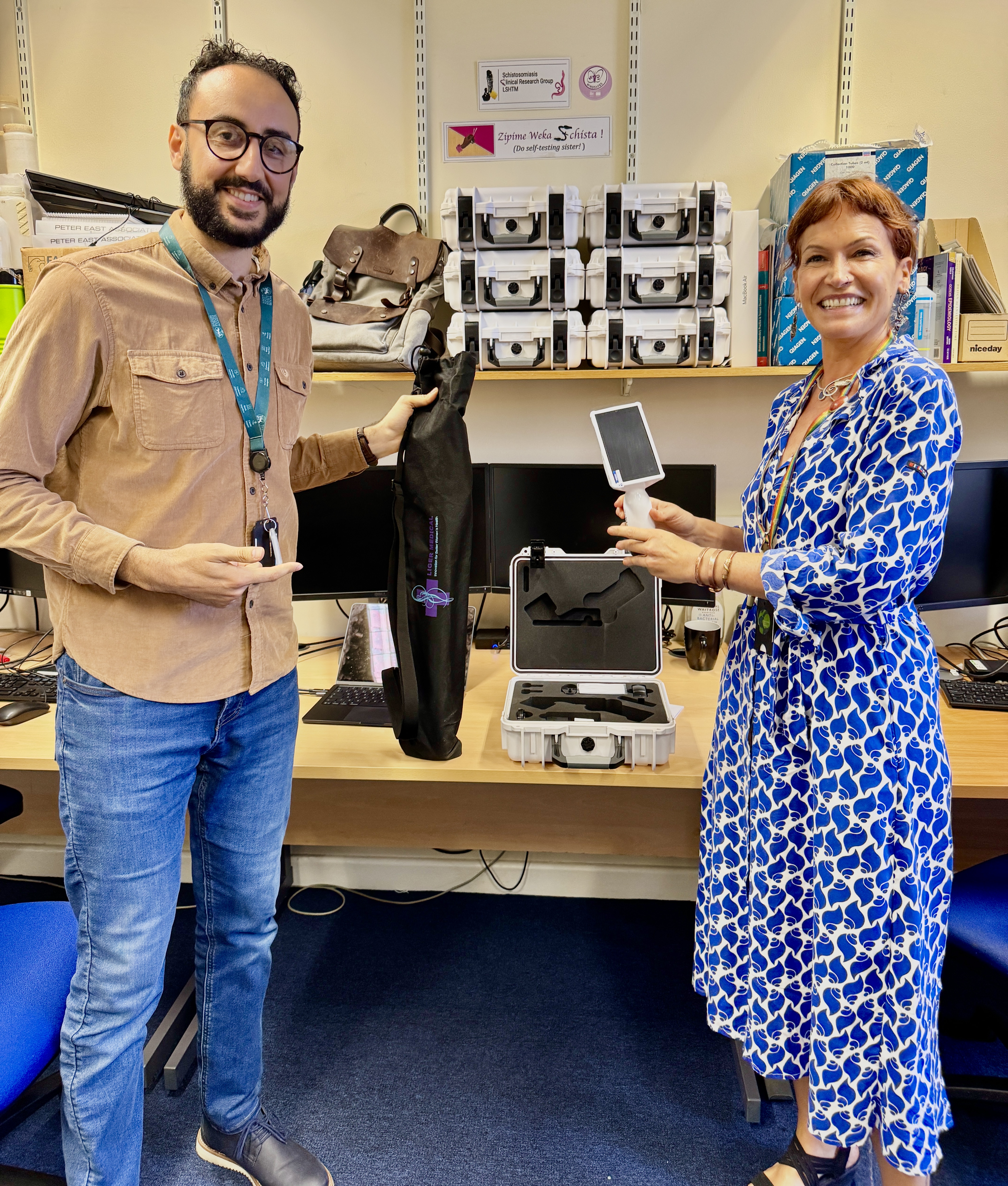
Professor Amaya Bustinduy, WINGS-4-FGS Project Coordinator, and Dr Bilal Djeghout, Research Fellow and member of the WINGS-4-FGS coordination team (both pictured with one of the colposcopes), have been coordinating the preparation and deployment of the equipment in collaboration with partner teams. The colposcopes will soon travel to Malawi before being deployed across the four participating countries.
The equipment will support the visual diagnostic component of the WINGS-4-FGS diagnostic pathway, following urine microscopy and molecular testing.
In November, gynaecologists and other clinical staff from across the partner countries will come together in Malawi for practical training in colposcopy, visual assessment and the clinical procedures required for the trial.