Transforming Women’s Health Through Science, Action, and CollaborationTogether with communities, researchers, health care providers, and policymakers, WINGS-4-FGS is finding ways to effectively detect and treat the neglected disease Female Genital Schistosomiasis (FGS) and giving women and girls the health and dignity they deserve.Discover Our Story
Transforming Women’s Health Through Science, Action, and CollaborationTogether with communities, researchers, health care providers, and policymakers, WINGS-4-FGS is finding ways to effectively detect and treat the neglected disease Female Genital Schistosomiasis (FGS) and giving women and girls the health and dignity they deserve.Discover Our Story
We use cookies on our website. Cookies help make the website more user-friendly, efficient, and secure.
Please select your cookie preferences
Strictly necessary cookies (always active)
Strictly necessary cookies are cookies required for the website to function and provide the basic information requested by the website user. These cookies are not used for tracking users.
YouTube cookies
YouTube cookies allow the playback of YouTube videos directly on our website. When YouTube cookies are used personal data or connection information, such as the IP address, may be transmitted to YouTube. By accepting YouTube cookies, you consent to the transfer of this data to YouTube. Please see our privacy policy for more information.
University of Health and Allied Sciences, Institute of Health Research
The University of Health and Allied Sciences (hereinafter, UHAS) was established by an Act of Parliament (Act 828) in December 2011 and envisioned to become a pre-eminent research and practically oriented health educational institution dedicated to community service.
The Institute for Health Research (hereinafter, IHR) is the premier research institute of UHAS. IHR was established in 2016 with a focus on conducting research into health problems using multidisciplinary approaches, and provision of extension services. IHR is also mandated to build capacity for cutting-edge research through teaching, mentorship, and inter-disciplinary collaborations. IHR has four (4) research centres namely: Centre for Health Policy and Implementation Research; Centre for Malaria Research; Centre for Neglected Tropical Diseases research; and Centre for Non-communicable Diseases research. Additionally, there is a research operations office that coordinates research activities in the university (See official website: https://ihr.uhas.edu.gh/).
Over the past decade, the IHR has achieved phenomenal success, particularly in the areas of research, teaching, and mentorship. These successes were achieved through the diverse wealth of expertise across disciplines, particularly in Implementation Research, NTDs, Malaria Research, Health Policy, and Systems Research. IHR has been a World Health Organisation (WHO)/TDR Satellite Training Centre for Implementation Research in Ghana since 2018. Thus, the institute trains and gives mentorship to individuals and institutions in IR. Per the record, IHR has trained hundreds of researchers, clinicians, and policymakers across Ghana since 2015.
Role within WINGS-4-FGS
UHAS is the lead institution responsible for raising awareness of FGS knowledge through community-based interventions and advanced training for healthcare workers. Work Package 1 led by UHAS will use the concept of operational research to assess, implement, monitor and evaluate awareness-raising and training initiatives in the partner countries. UHAS is also the lead institution for WP 5, responsible for providing a clear framework for scientific project leadership within the Project Management Team to ensure a smooth project. Additionally, UHAS supports all other WPs.
Prof Margaret Gyapong
“I am excited that we have started the WINGS4FGS project. I am looking forward to seeing FGS integrated into routine service delivery and academic curriculum.”
Prof Verner N. Orish
“Excited to be part of this multidisciplinary, integrated effort to combat the menace of schistosomiasis among our women.”
Dr Adu Appiah-Kubi
“WINGS-4-FGS connects partners across the world to work together and enhance the lives of women across the continent”
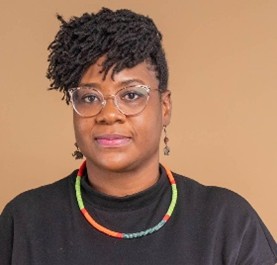
Ms Rejoice Tawiah
“As a member of the Communications and Public Engagement Committee, WINGS provides me with a valuable opportunity to use my voice and skills to advocate for marginalised women and children whose sexual and reproductive health rights have been curtailed.”
Mr BAFFOUR GYEM DARKWA
“WINGS-4-FGS empowering women and girls through education, uplifting communities for a stronger and brighter future.”
Dr Mustapha Immurana
“I am excited to be part of WINGS-4-FGS because among others, it will focus on community-level awareness creation initiatives in the selected countries, which the FAST-Package could not implement.”
Mr Kwesi Aseredum Hagan
“Being part of this project provides a unique platform to build my confidence, leadership abilities, and professional identity the opportunity to learn directly from experienced leaders in science, research, and innovation is invaluable to my career journey.”
Dr Evelyn Acquah
“I am excited to be part of WINGS-4- FGS because it will focus on community-level awareness creation initiatives empowering women and girls.”
Dr Alfred Kwesi Manyeh
“WINGS-4 FGS offers capacity-building opportunities for public health research and implementation in partnership with communities to improve health outcomes for rural poor in sub-Saharan Africa. FGS threatens the reproductive and sexual health of women and girls, but WING-4 FGS presents opportunities to improve health outcomes for rural poor in sub-Saharan Africa.”
Dr Irene Honam Tsey
“I am excited to be part of WINGS-4-FGS and to help translate our evidence into better detection, care, and a voice for girls and women across Africa”
Prof Azanu Wisdom Klutse
“It is a great privilege to partner with colleagues to work on the WINGS-4-FGS. The findings I am convinced will shed a lot of light on FGS and will better equip health care workers in taking care of our females.”
Mr Fidelis Edem Yao Anumu
“WINGS-4 FGS offers the opportunity to collaborate other research institutions and enhance our South-South and South-North research endeavours. I am excited about the mutual learning experience that this project offers and to see capacity built in FGS diagnosis and treatment within the routine health delivery system.”
Together, we can advance science to bring better health to millions of girls and women.